



Akebia
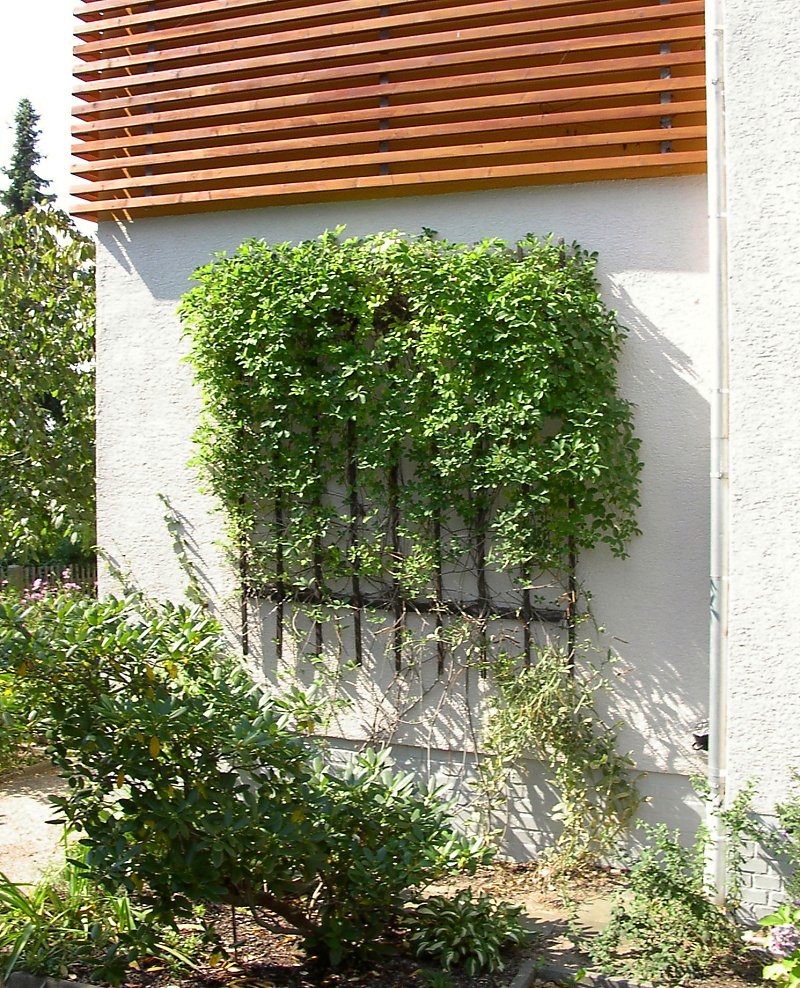
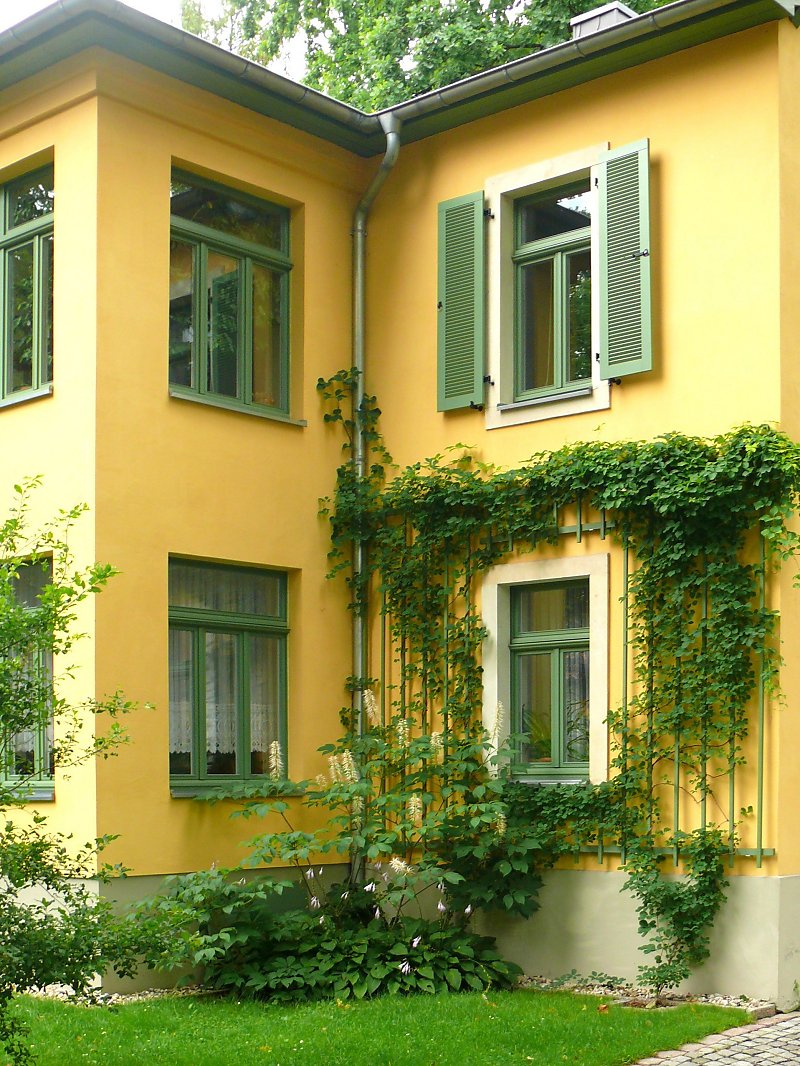
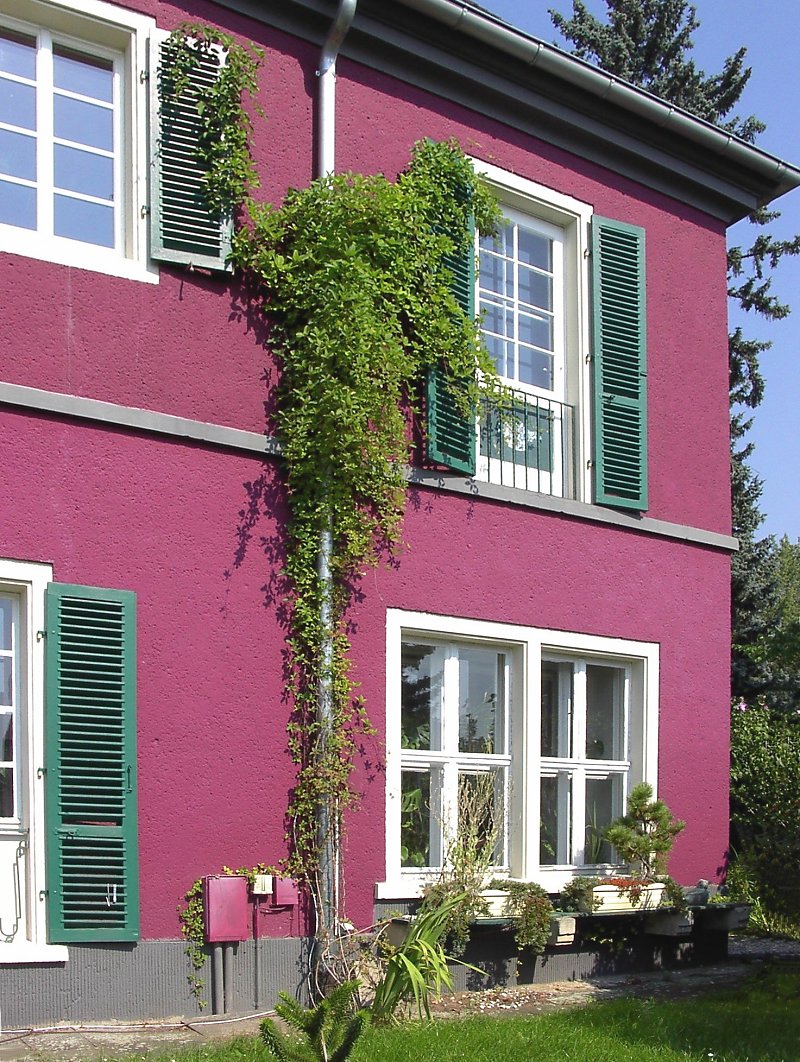
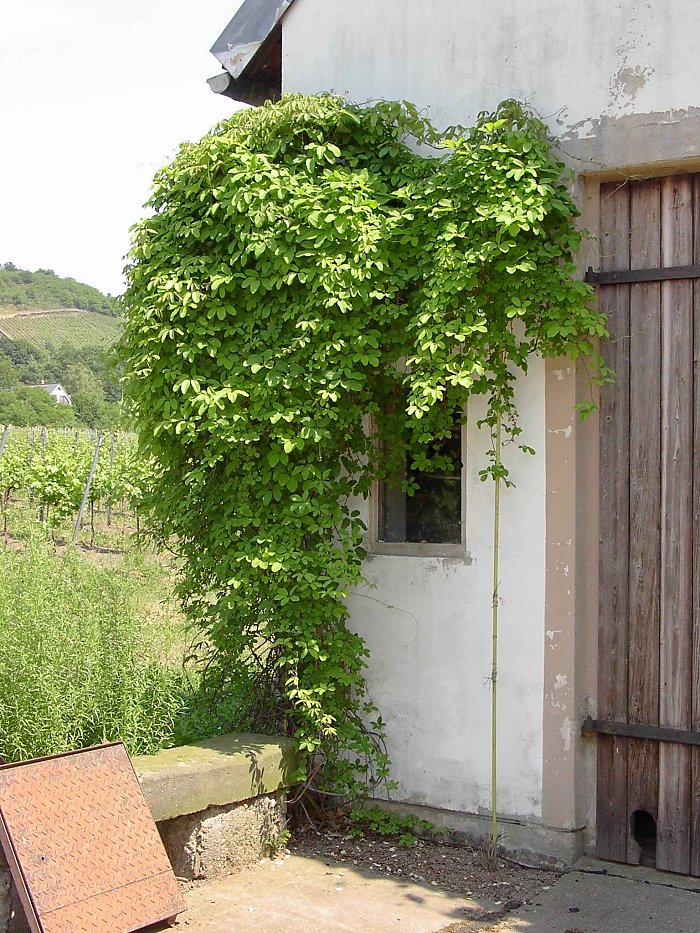
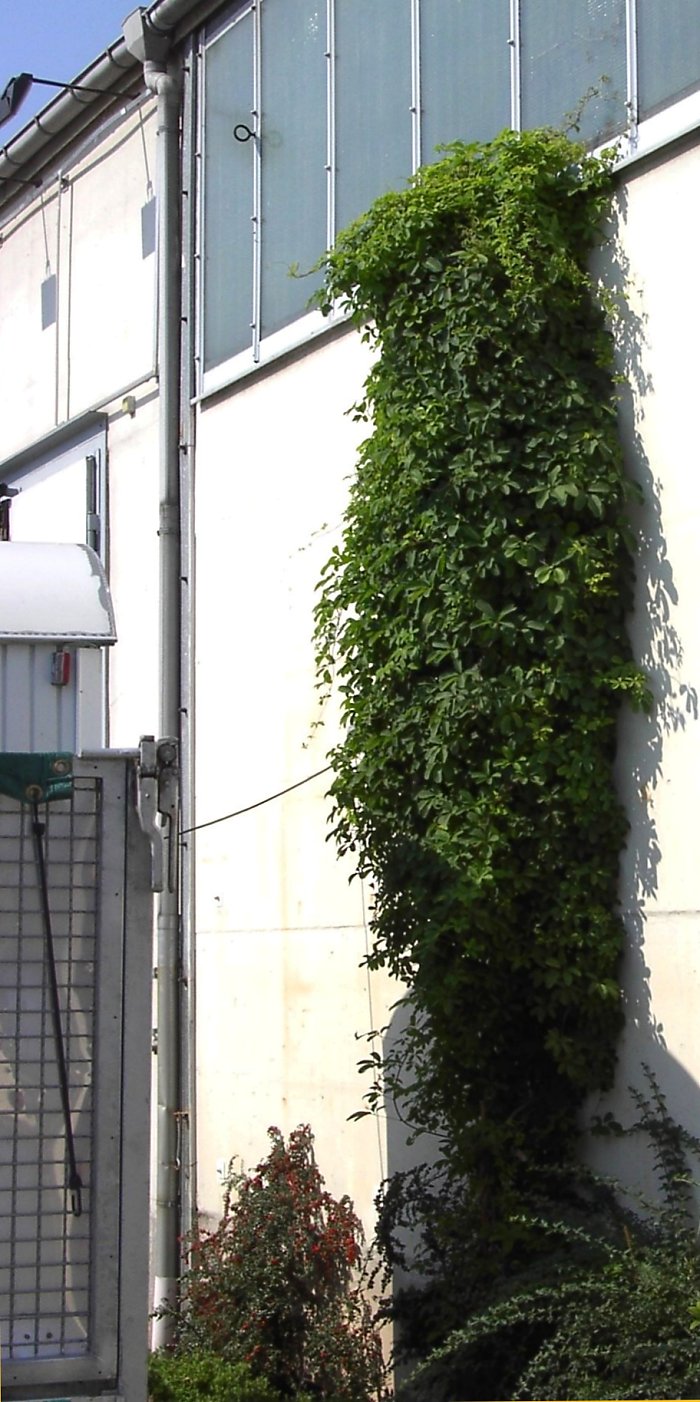
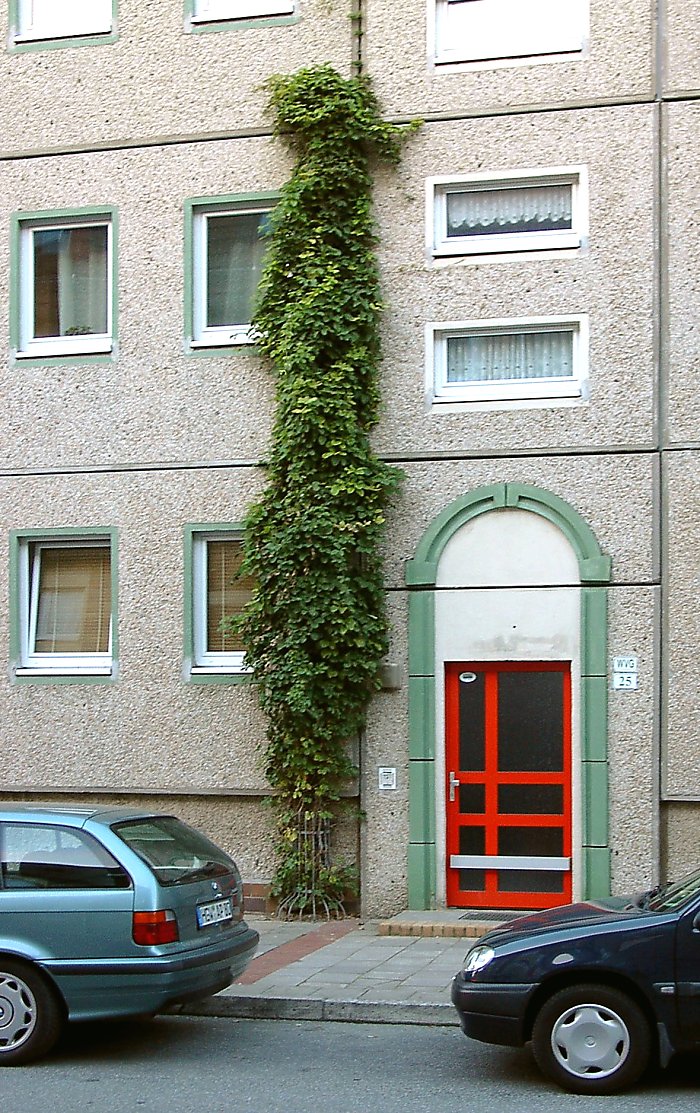
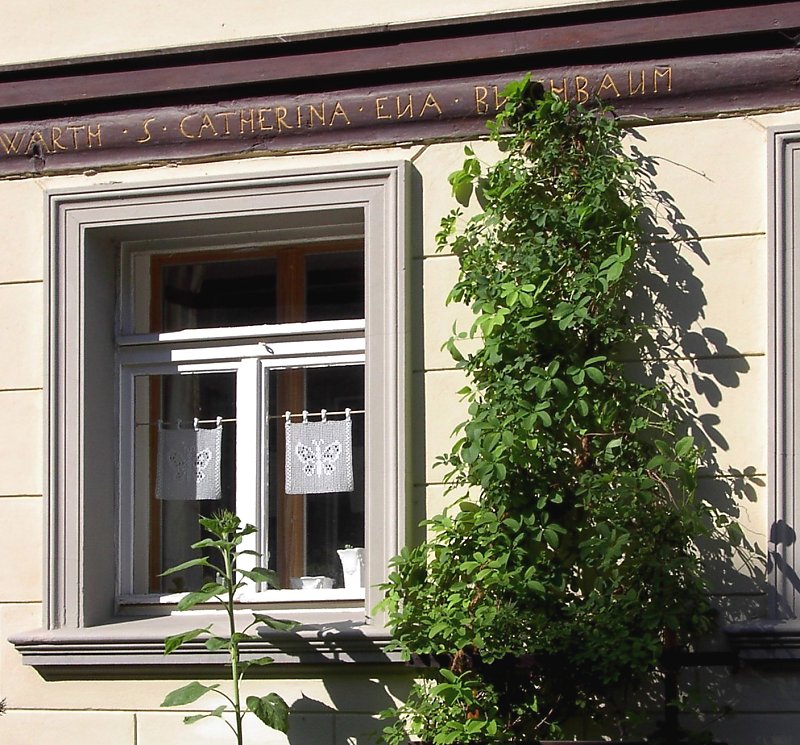
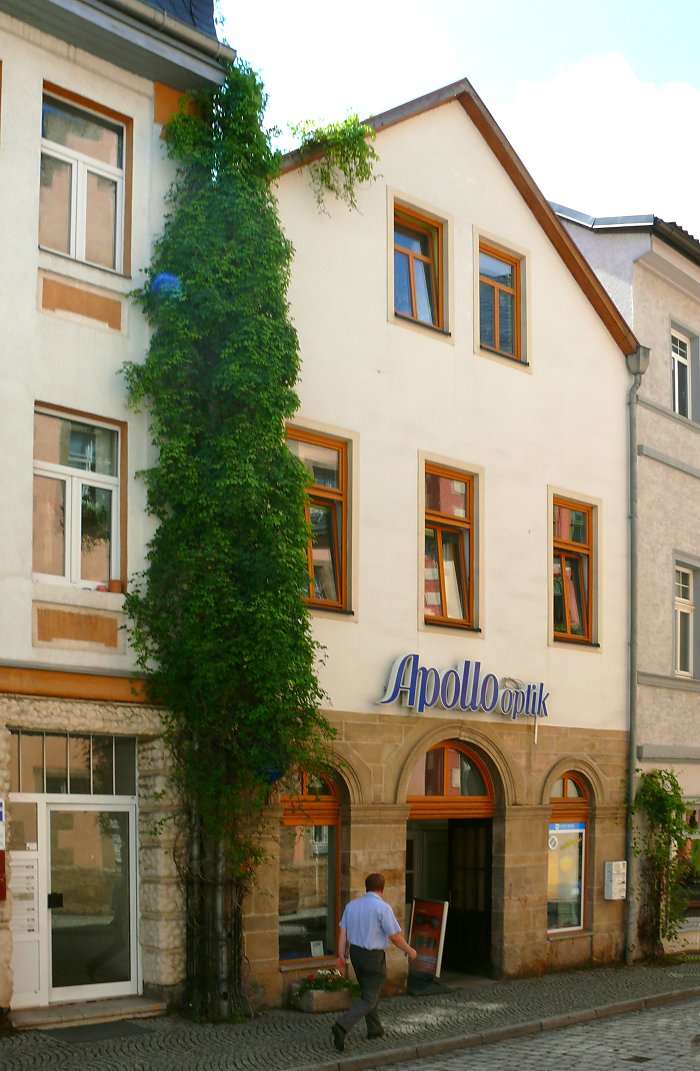
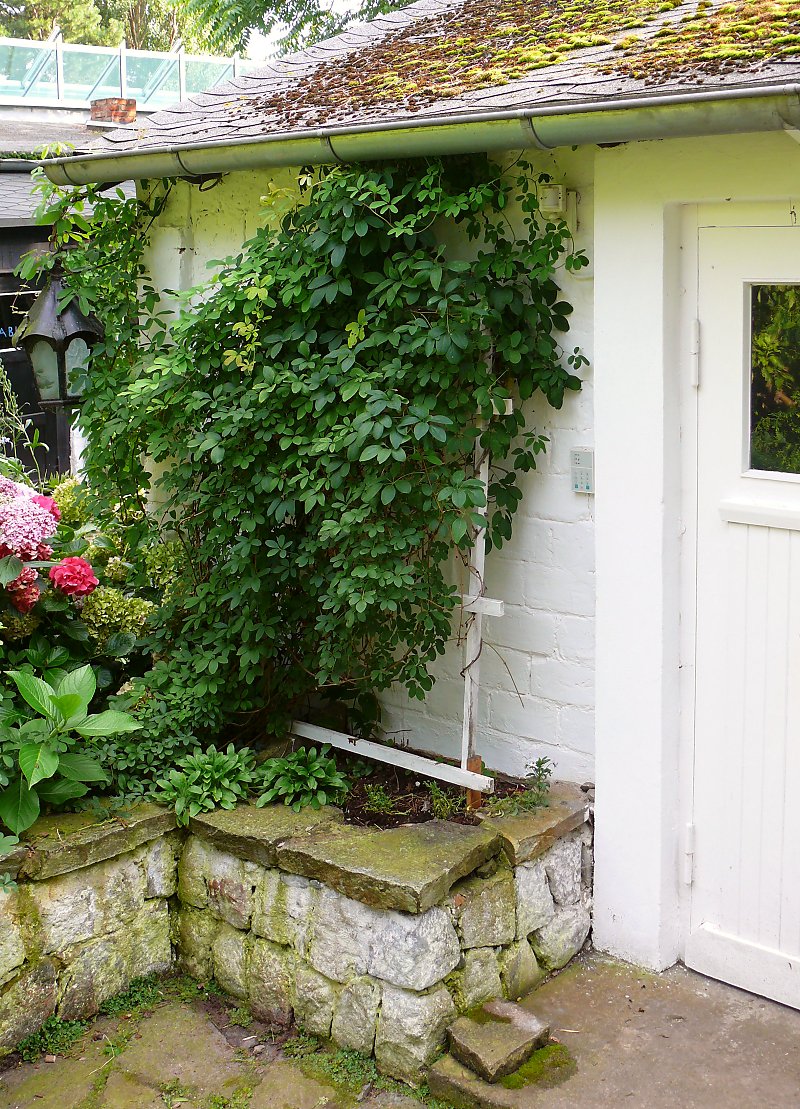
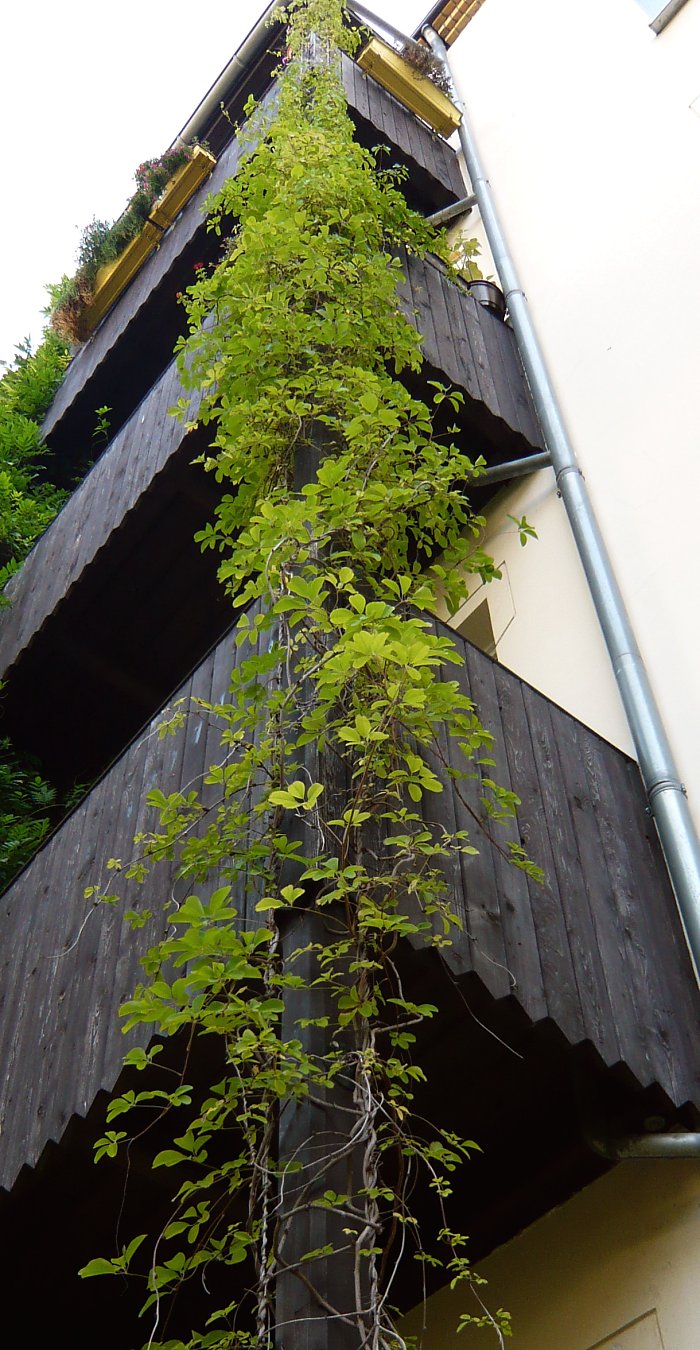
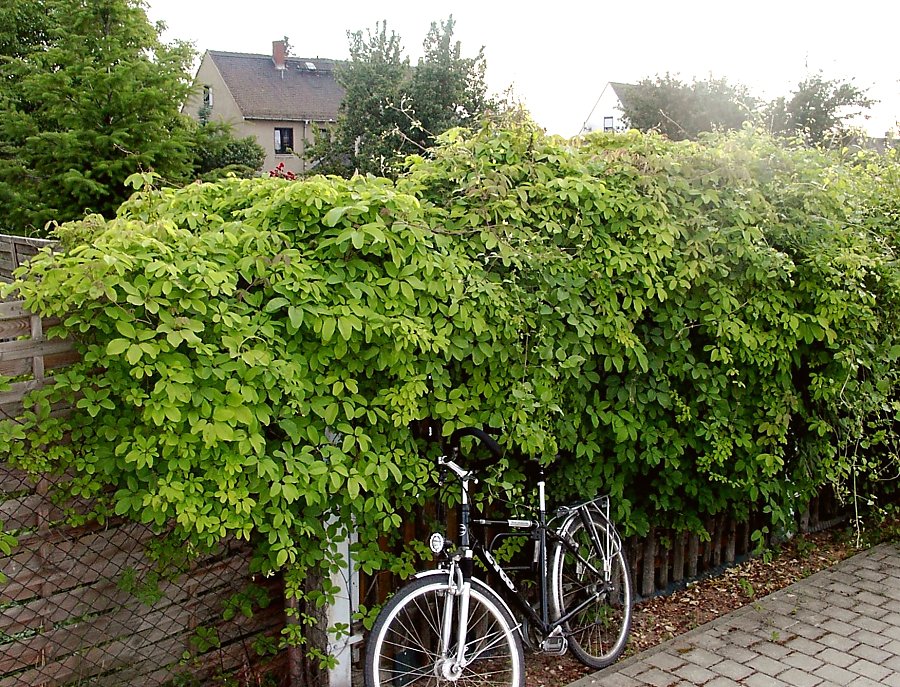
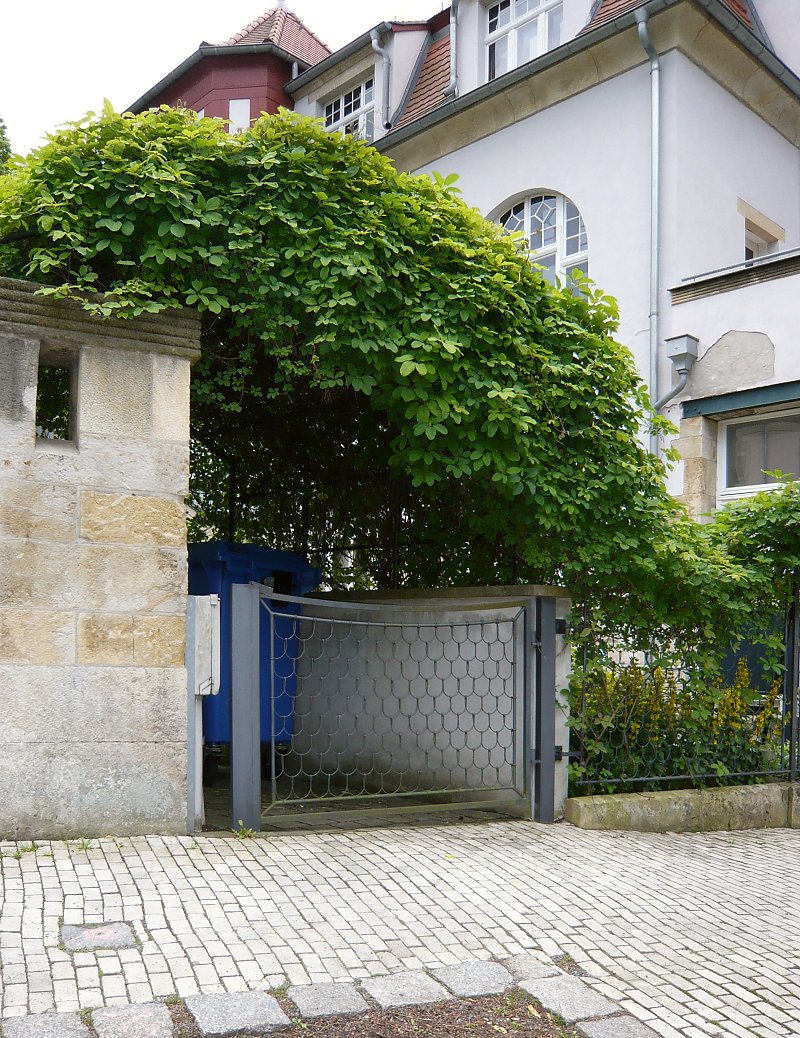
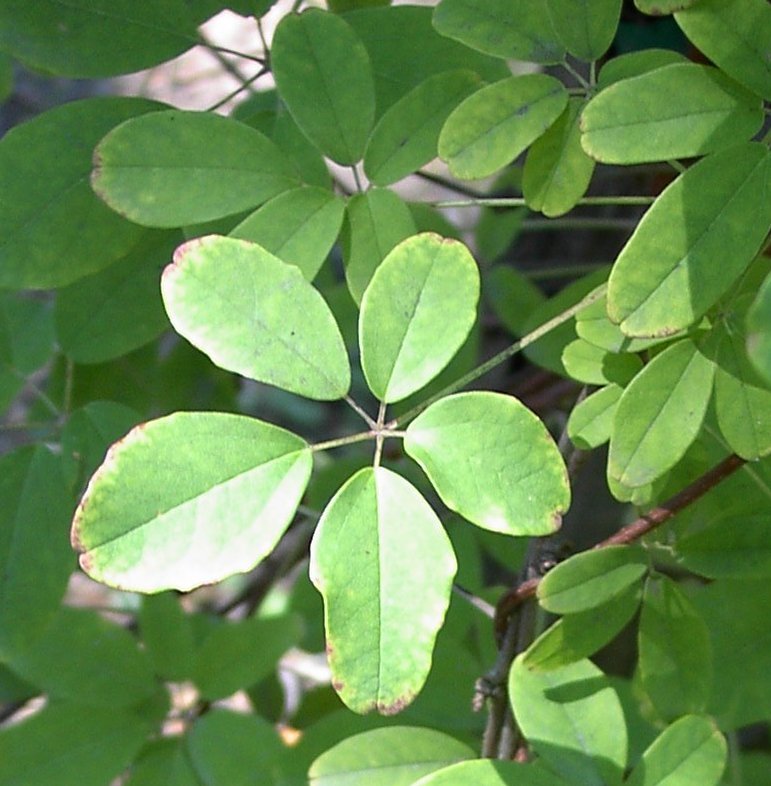
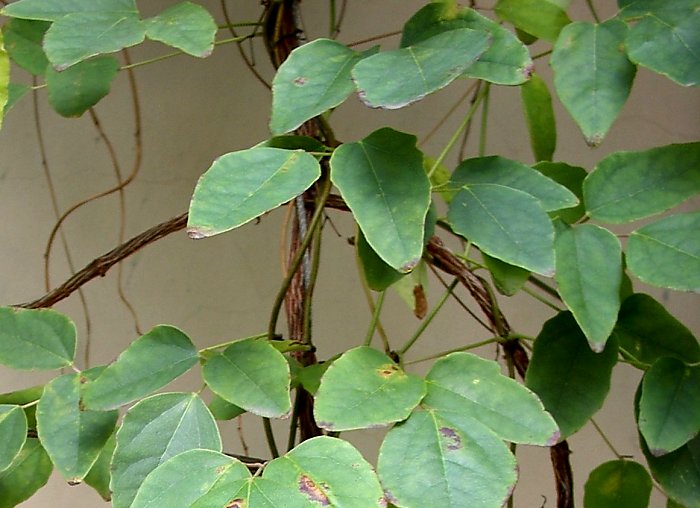
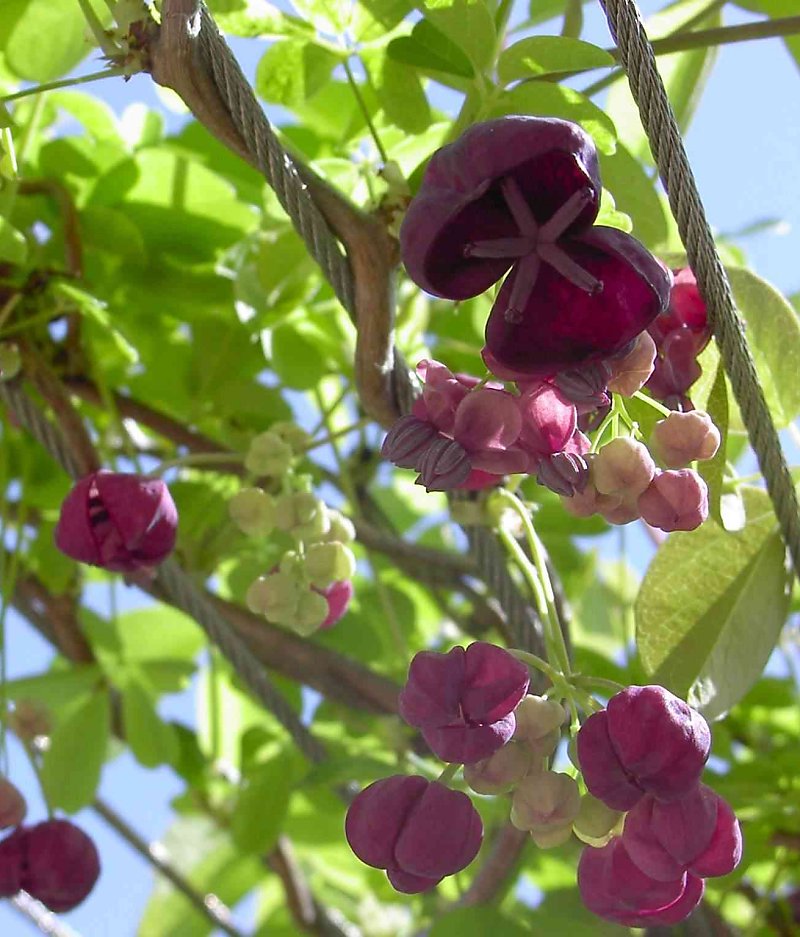
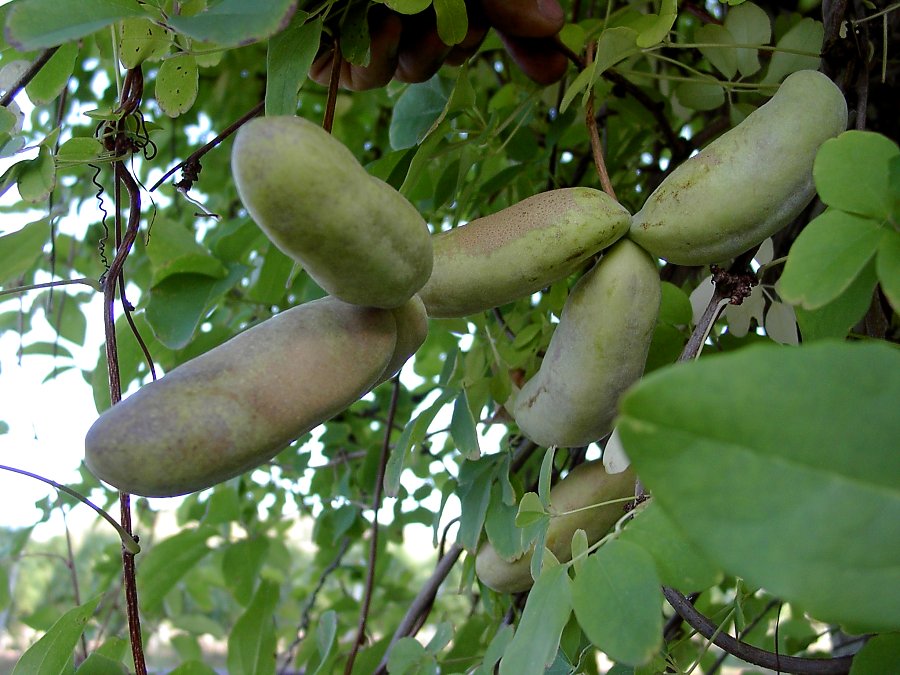
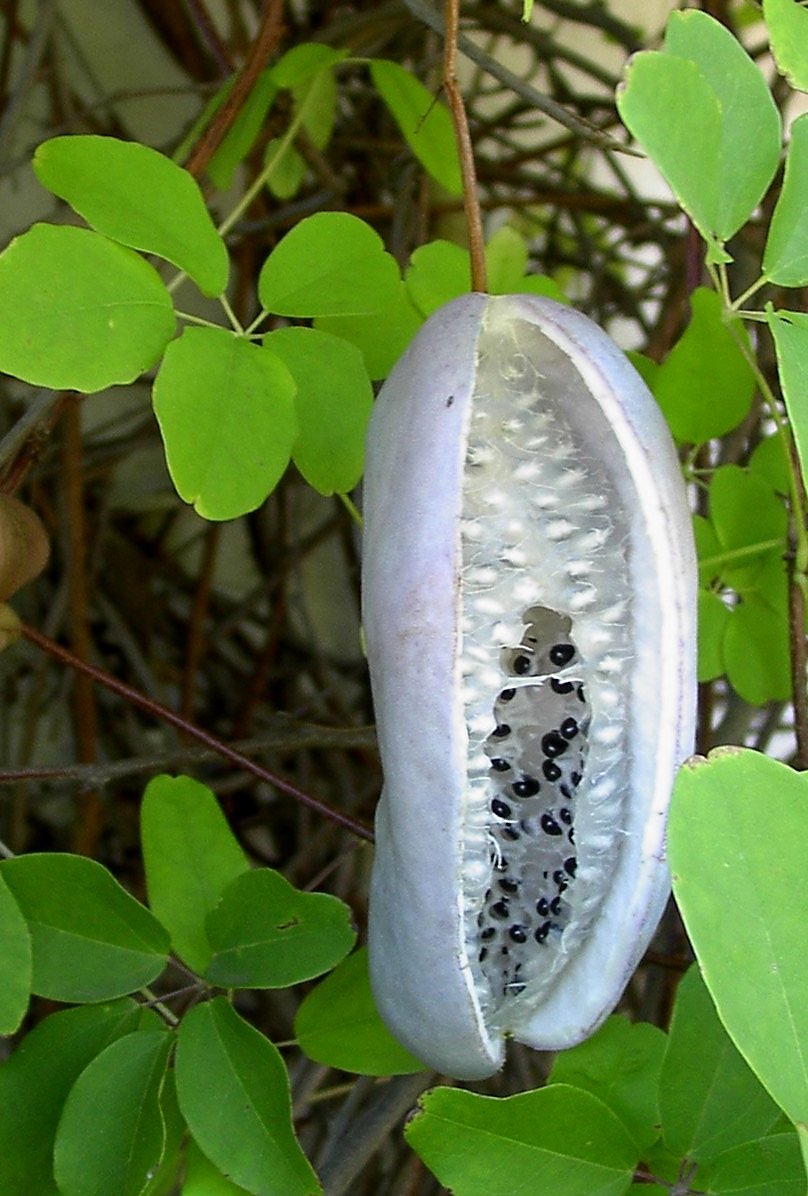
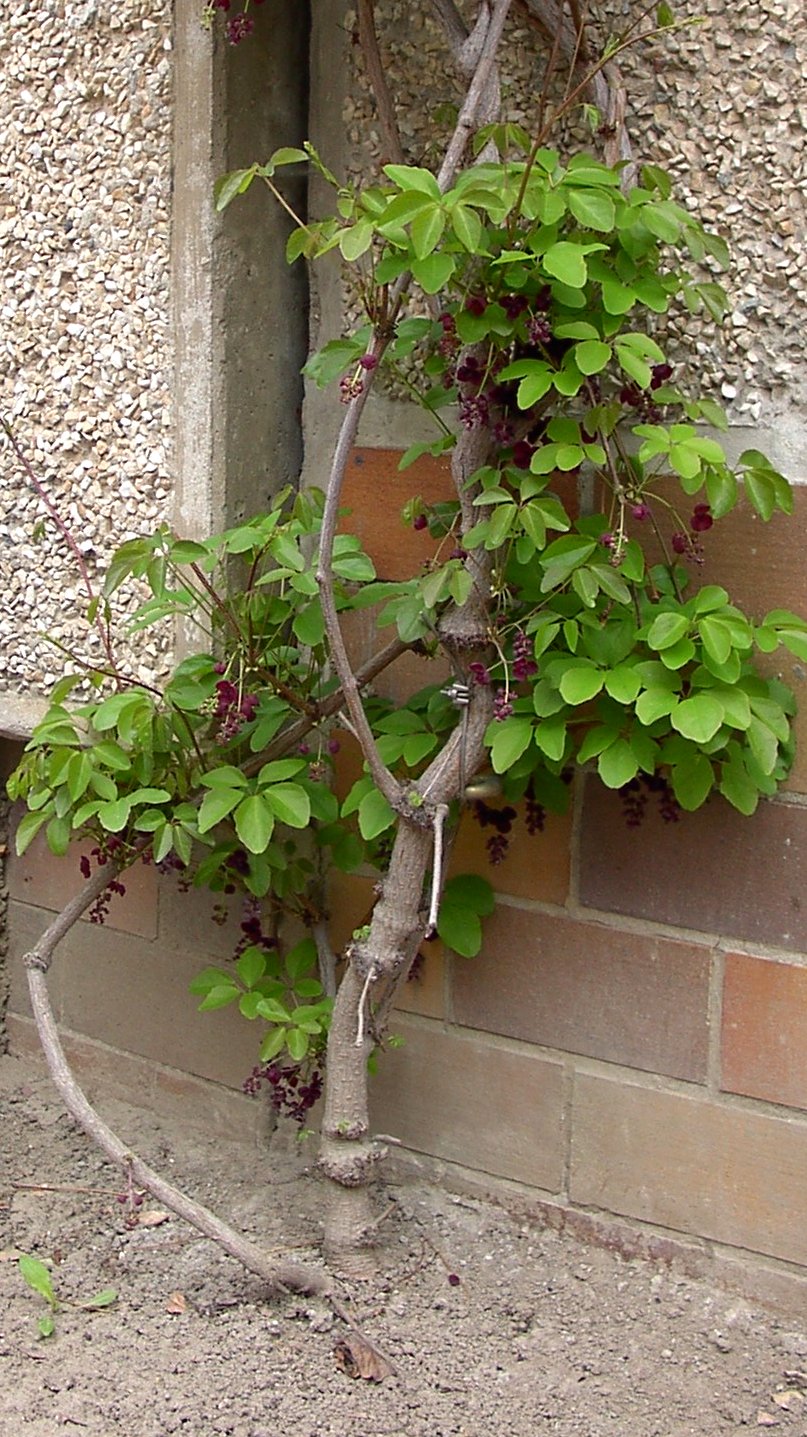
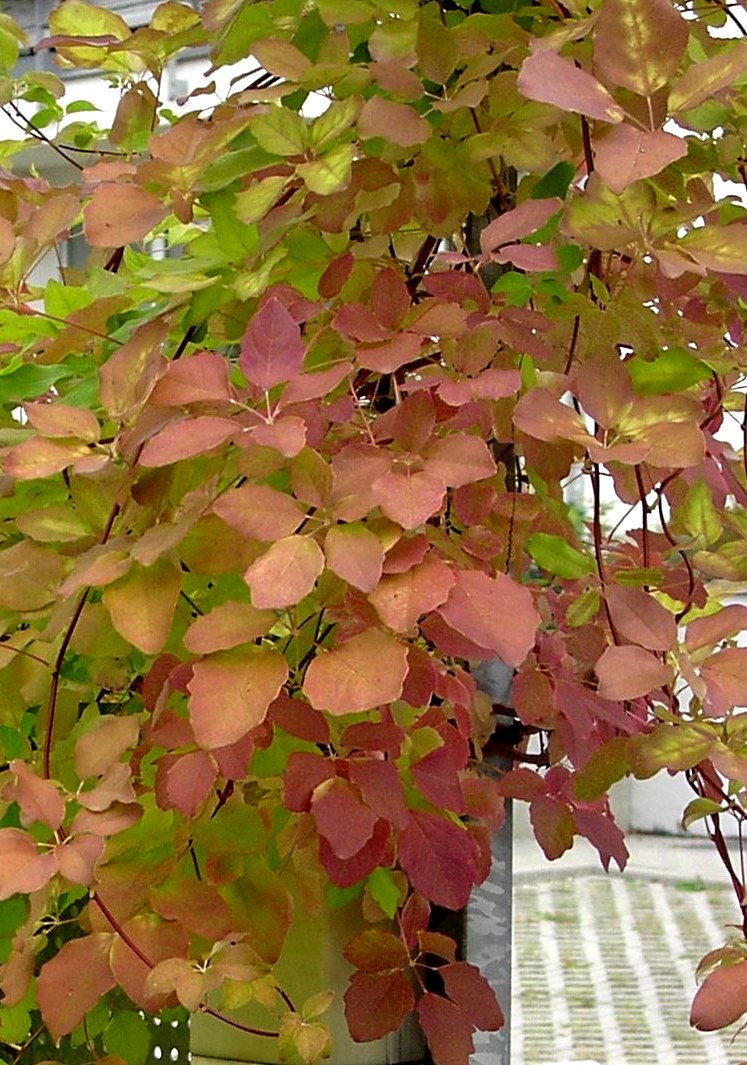
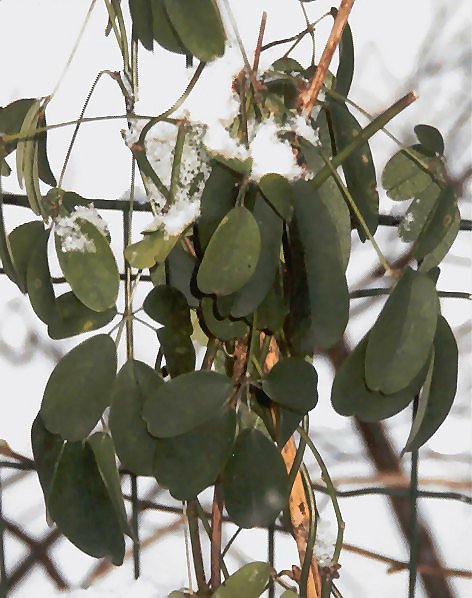
A very healthy climber, appreciated for its lovely elliptical leaves, ubiquitous chocolate scent with small dangling pink-brown blooms, and occasional seed-pods (edible)... and particularly for its long lasting foliage; can be used in a variety of ways for facade greening. Easy to care for, little pruning necessary. Ideal for high greening, drainpipes, large walls, canopies / 'green roofs' and so on... >>> Price
Also called "chocolate vine," "five-leaf chocolate vine," and "five-leaf akebia" (Latin: Akebia quinata // trifoliata).

To thrive...
Akebia needs a sunny to semi-shady location ~ warm and somewhat protected from wind. Give it nutrient-rich, sandy-humic, well-drained soil, and a regular water supply. Distance between plants: 1 - 2.5 m >> > Price
Properties and Pruning
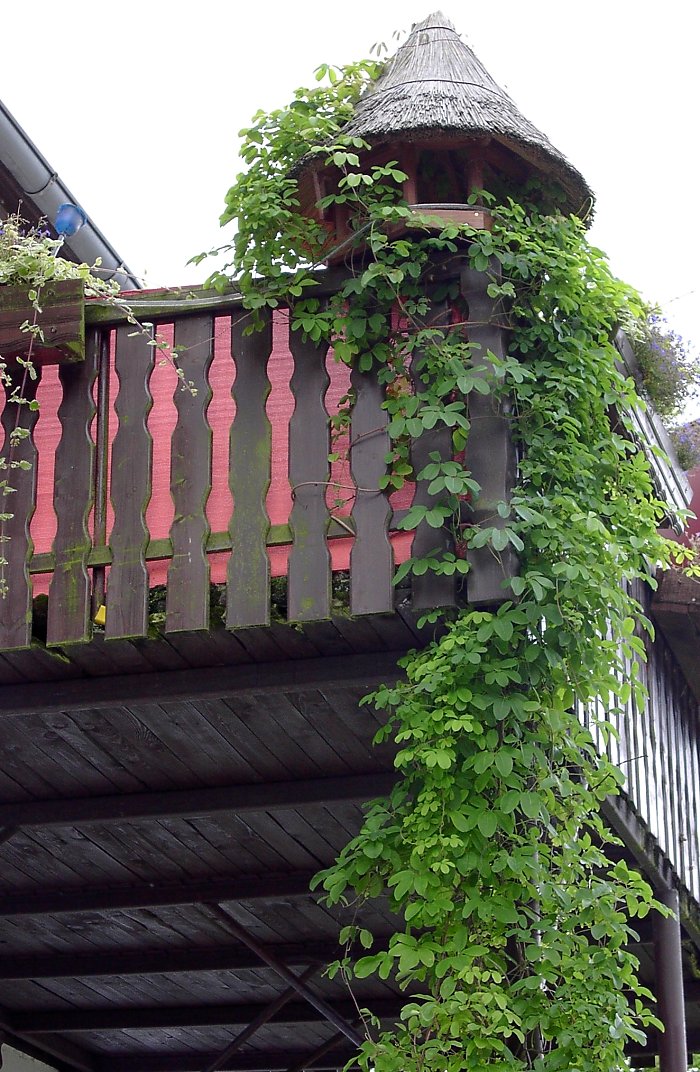
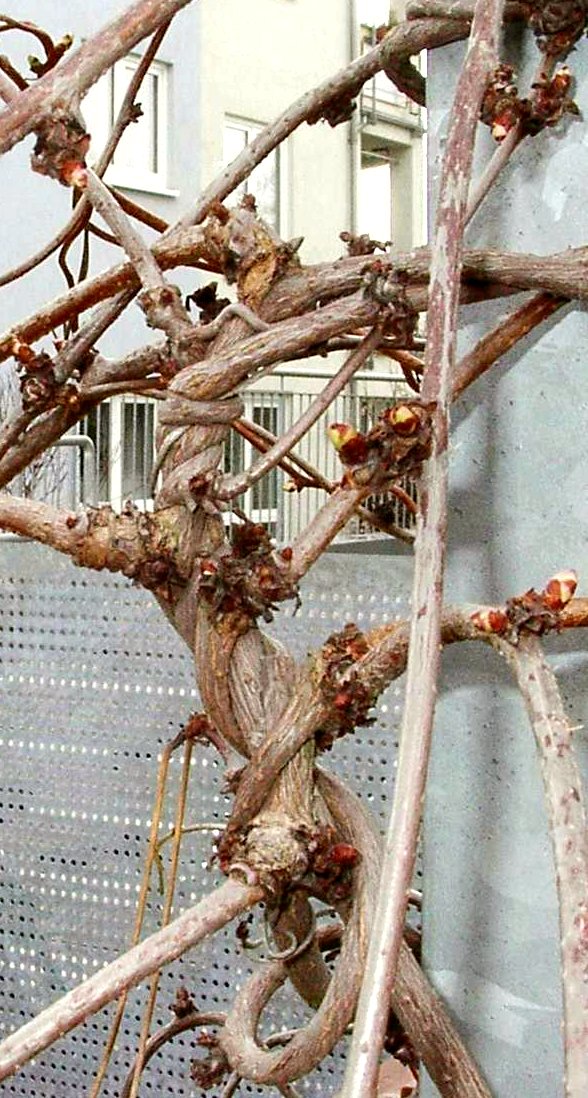
This twiner's initial growth is rather slow, but with care will display dense foliage after 2-3 years, and can grow up to 10 m in height (in wind-protected zones also known to grow up to 20 m!); can also display an overhanging (cascading) habit. The lower part tends to be bare, which the akebia's ground runners can compensate. A good water supply and relatively mild weather will ensure that the foliage will last well into winter. In warmer climates, (e.g. wine-growing regions), the plant is semi-evergreen. Has red-brown flower tufts/clusters in early spring, only visible at close range. The bizarre, edible fruit develops - if at all - only in a warmer viticultural climate. Prune every 2-3 years to thin out; occasional rigorous pruning of single shoots in early spring will stimulate new shoots in the base area.
Climbing Aids for the Facade
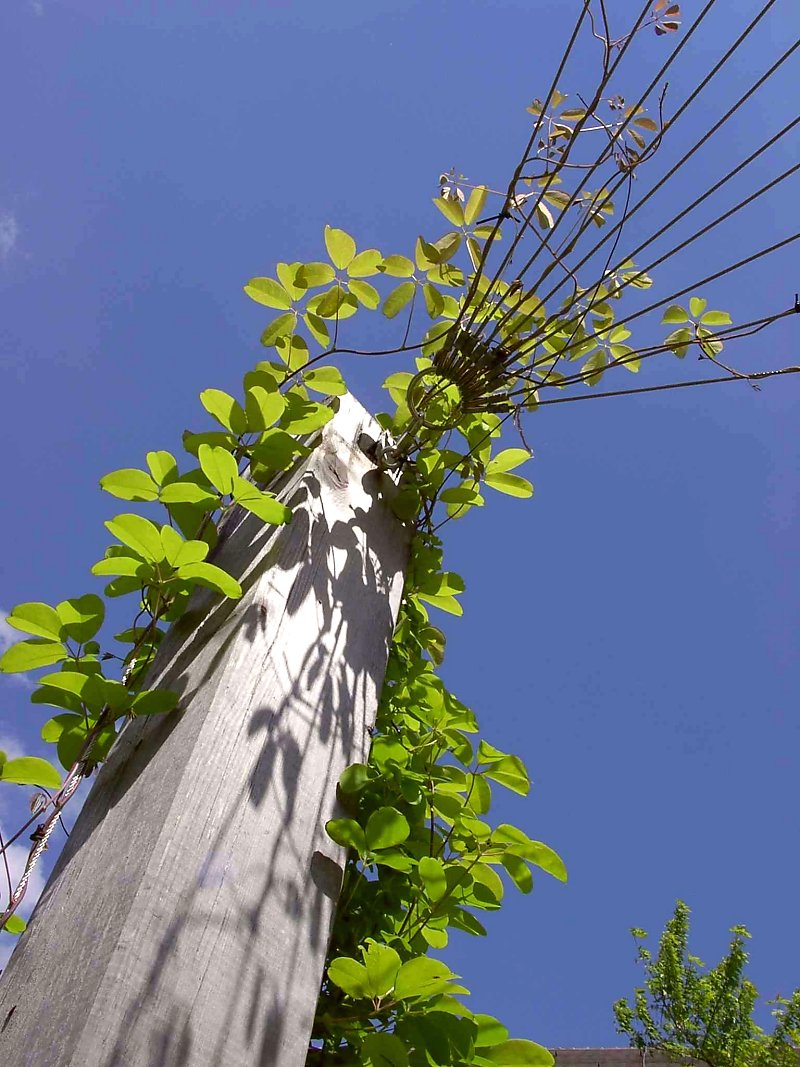
We recommend a trellis system with vertical axes that are about 25 cm apart from each other. Horizontal axes would require the interlacing of shoots into the trellis by hand. See the bottom of the page for suitable cable systems. Go with medium or preferably, heavy / massive cable systems for high greening areas. Easy and light systems are good for potted plants and/or small areas.





What else can be greened with akebia?
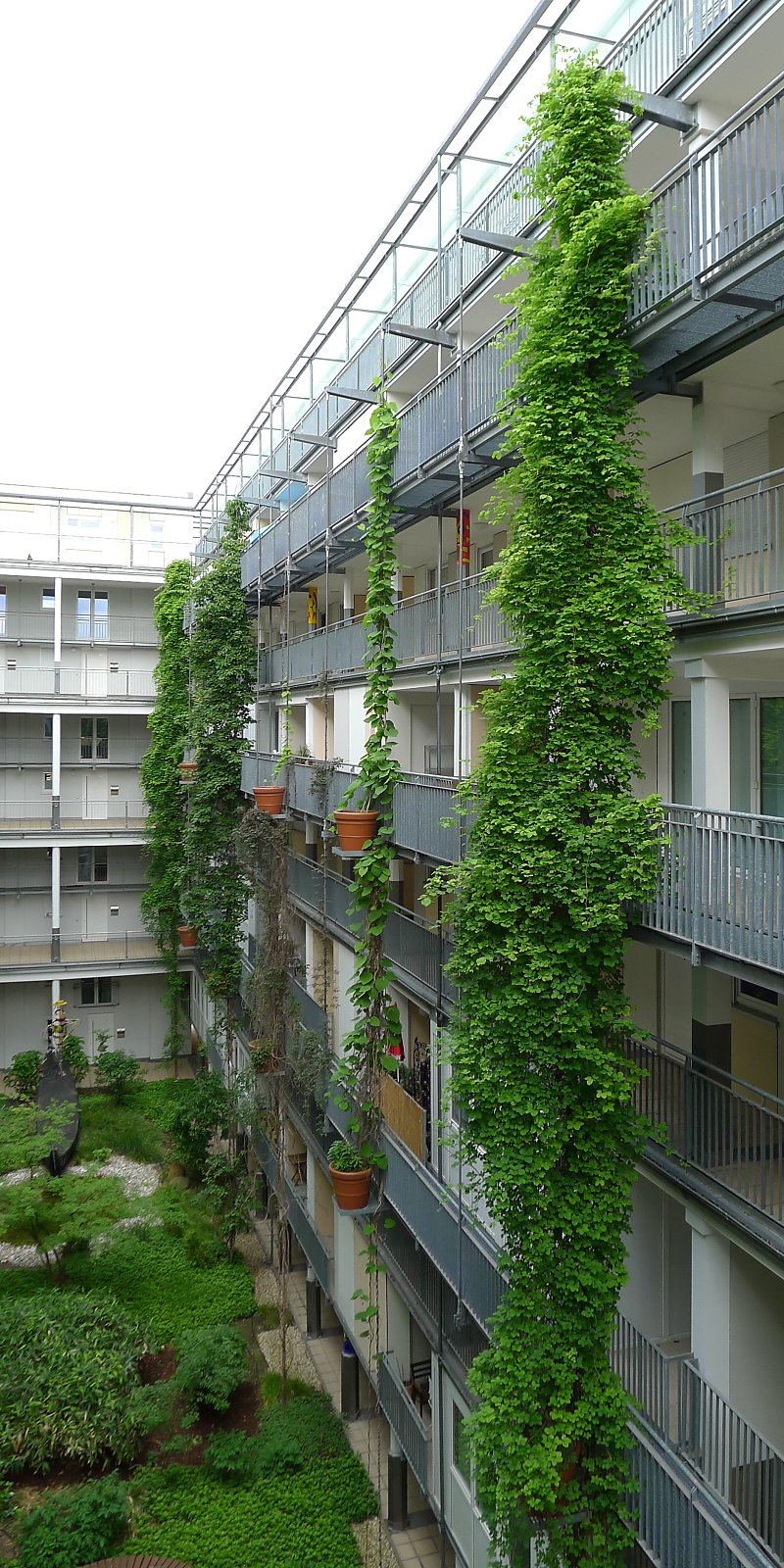
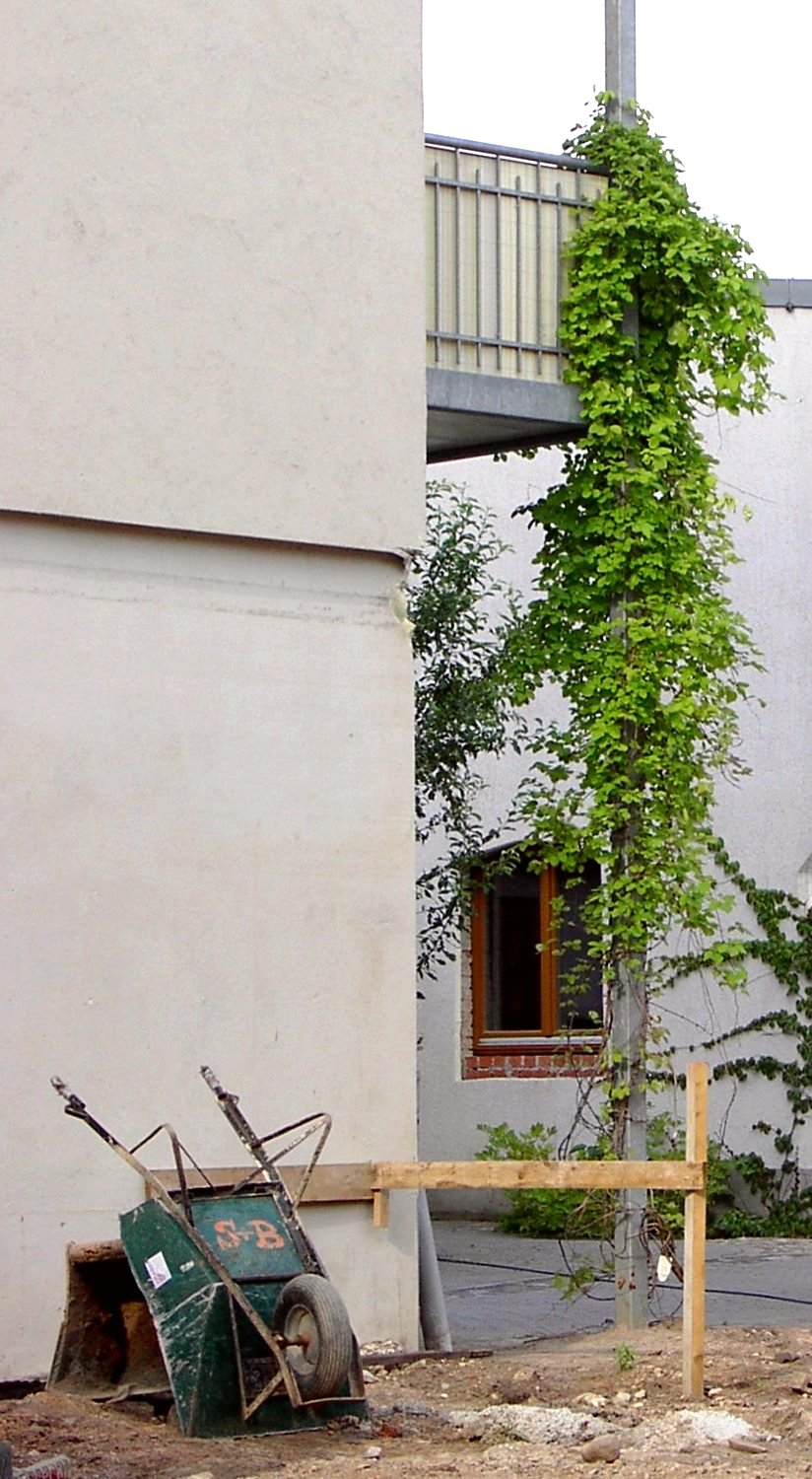
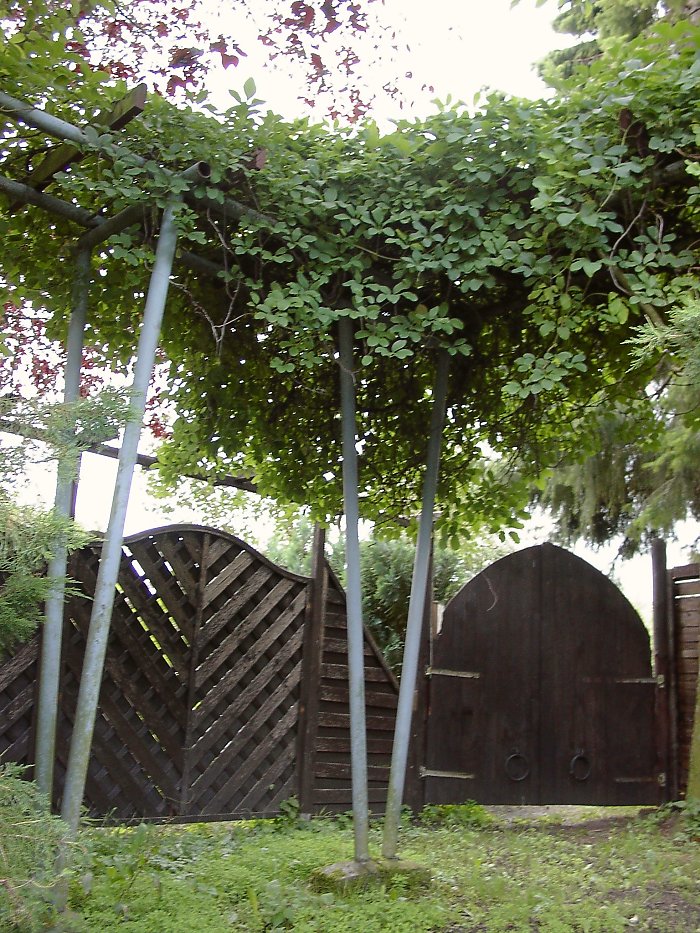
Balconies, pergolas, pillars, free-standing poles/masts, and other objects (like fences) can be greened with the chocolate vine...



Wire Rope Systems for Akebia
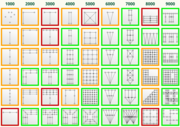
Please click on the graphic illustrations for details!
| = suitable | = of limited suitability | = unsuitable |


