



Clematis vitalba - Old Man's Beard / Traveler's Joy
Clematis vitalba is a European native and wild species within the genus clematis. Its very small, white, star-shaped flowers wouldn't testify to its clematis heritage, and in some parts of the world (Pacific Coast of the U.S), it may be considered invasive. But we love it for being an exceptionally robust and healthy plant that develops giant vine-lianas, which makes it very interesting for building greening. Leafy, vital, and drought-resistant, clematis vitalba is often chosen for high greening projects, and can be used for concrete facades, poles, or masts (in street greening, for example). Clematis vitalba can provide accents and interesting contrasts in facade design.
Also known as 'old man's beard,' 'traveler's joy' >>> Price

To Thrive...
Plant vitalba in a shaded to sunny location; soil should be humus-rich and well drained. The plant is very heat resistant and watering is not necessary. Distance between plants: 3 to 5 metres. >>> Price
Characteristics and Pruning
A petiole (leaf tendril) climber, this clematis has an incredibly strong growth (up to 12 metres in height or more), and also exhibits a trailing (overhanging) habit. Foliage from May to October, flowering rather unimpressive but long-lasting from July well into late autumn. Seed heads are beautiful and fine and are the inspiration for this clematis' common name-- 'old man's beard.' Clematis vitalba belongs to 'pruning group 3' and must be cut down to 20 - 60 cm above the ground at the end of the year. When greening a taller facade, however, do away with hard pruning. Instead, the focus should be on building up or maintaining the framework, which is shortened and thinned out every year. Clematis vitalba are extremely healthy and also highly drought-resistant!
Climbing Aids for the Facade
A trellis element for this clematis should have a fine grid spacing of about 30 to 50 cm. See the bottom of the page for suitable wire rope systems. When you intend to cultivate without regular pruning, the grid spaces can be larger (so, more spacious arrangements), which serve less as "climbing aids" and more as anchors for the trunk-stem structure. Our easy basic design is strong enough, but the medium gauge allows for optimal development. For high trellises, go with a heavy / massive trellis kit.

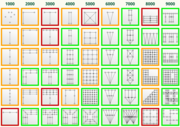


Suitable wire rope systems for clematis vitalba
Please click on the graphic illustrations for details!
| = suitable | = of limited suitability | = unsuitable |


